Science is what makes healthcare better. But even the most meaningful insights need to be shared in a way that's accessible and resonates… all within the boundaries of the law.
That's where we come in, transforming your invaluable work into compliant, patient-centric stories that clinicians, carers, and the people they support can understand and get behind.
Accuracy. Clarity. Compliance. Empathy. Healthcare messaging won't get results unless you strike the right balance between all four.
We work out the most effective dosage, ensuring your marketing efforts land in the right way, with the right people, at the right time.

Make it easy for partners, professionals, and other stakeholders to stay up to date, and become an authoritative, go-to sector resource.
From tech specs to patient benefits and wider community impact, we help you make sure your products are more visible, understood, and preferred.

We translate complex analytics into accessible, informative, and – most importantly – persuasive marketing collateral.

Spell out the scientific rigor, patient benefits, and market impact of your breakthroughs and build awareness, promote adoption, and attract more investment.

Book a free, no-obligation chat to discuss your requirements.
Compliance constraints govern specific claim types – efficacy, clinical comparisons, anything construable as a patient recommendation. They don’t govern tone, storytelling, or structure. The discipline is knowing precisely where the constraints apply, then applying the full force of persuasive writing to everything they do not. Most healthcare content is weak not because of compliance requirements but because it stops at accuracy and never asks the next question: “How do we make this cut through?”
A care equipment provider can describe, in specific and human terms, the difference a piece of equipment makes to an occupational therapist's ability to support a patient – without making a clinical claim. A healthcare technology company can tell the story of how its platform changes the working day for a clinical team – without overstating what the technology does. The room for compelling content within compliance constraints is almost always larger than healthcare marketing teams realise.
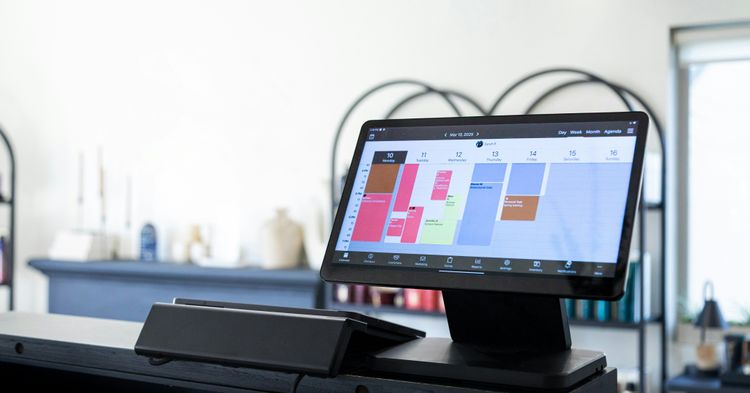
For example, Gunning Marketing worked with Brain Treatment Center on messaging and web copy delivered in 10 days, navigating regulatory constraints and earning board approval at first presentation. With Aesthetic Nurse Software, the brief required balancing clinical accuracy with benefit-led messaging for an audience coming from a medical background. The result generated leads, boosted sales, and earned outstanding feedback.
Healthcare technology marketing loses the human element when it describes capability rather than impact. A hospital procurement team, an NHS trust digital lead, or an OT evaluating assistive technology isn’t buying a technical capability, they’re buying a better outcome for the patients, clinicians, or services they’re responsible for. So start from that outcome and work backwards: what’s better for the patient because of this technology? What can a clinician do now that wasn’t previously possible?
Case studies are particularly powerful in healthcare technology because they demonstrate human outcome in a way feature descriptions can’t replicate. A case study describing a specific patient situation, the problem the technology addressed, and the change in clinical or operational outcome – written with appropriate accuracy and consent – is the most trusted content a healthcare technology provider can publish.
Tone matters, too. Although technical accuracy is essential, it shouldn’t be delivered in language that sounds like a clinical trial abstract. You boost effectiveness when it’s in language that, for example, a busy manager can read in a few minutes between meetings.
OTs and healthcare commissioners evaluate products from different positions. An OT is assessing clinical appropriateness and patient fit: the conditions and presentations the equipment addresses, adjustability, evidence base, and how the supplier performs if something goes wrong. A commissioner is evaluating cost-effectiveness, scalability, and total pathway cost, not just acquisition price. Copy that tries to speak to both simultaneously without distinguishing between them serves neither well.
Content for OTs should engage credibly with clinical detail, in language that respects their expertise. Content for commissioners should connect the equipment to health system outcomes and speak at the level of service design rather than individual patient benefit.
For example, Gunning Marketing worked with Wealden Rehab – a care equipment specialist serving OTs, care homes, hospitals, schools, architects, and councils – on content strategy and ongoing content production. The result: increased market share and stronger relationships.
Healthcare and care services typically need to communicate with at least 3 distinct audiences – patients or service users, referrers (GPs, OTs, social workers), and commissioners or funders. Each audience evaluates from a fundamentally different perspective. The most effective approach is clear segmentation: distinct messaging hierarchies and content pathways for each group, rather than copy that tries to speak to everyone with the same messaging.
For patients and carers, the emotional register matters: warmth, reassurance, and clarity about what to expect. Clinical referrers place more emphasis on credibility and rigour: evidence, outcome data, and professional qualifications. Commissioners focus more on value and accountability: cost-effectiveness, measurable outcomes, and governance transparency.
When Gunning Marketing worked with Living Well At Home, the brand positioning and website copy needed to reach equipment users and the OTs and social workers who refer the service. The approach involved establishing a value proposition that worked at both levels and structuring the site so each audience could find what they needed quickly.
Although having names is stronger where consent supports it, an anonymised case study is still compelling. If anonymising, preserve as much specific situational detail as possible. "A 78-year-old woman living alone following a hip replacement, referred by her OT for difficulty managing stairs" is far more useful than "an elderly patient with mobility difficulties." The clinical and situational detail can remain, crafting an engaging narrative and helping readers identify with the situation. And the most compelling case study elements – outcomes and testimonials – still work in an anonymised case study.
Whether the case study is anonymised or not, follow a best-practice structure that describes:
Wherever possible, include the audience voice – be it the patient, carer, clinician, or commissioner. The more quotes you can weave into the narrative, the more effective the case study will be.
When a service addresses a need the target audience hasn’t yet named, the copy’s primary job is to help the reader recognise themselves in the problem before you describe the solution. If they don’t yet recognise they need the service, leading with it won’t work. Instead, lead with the situation. Describe the specific circumstances, frustrations, or unmet needs that make the service relevant – in enough detail that the right reader thinks "That’s exactly where I am."
This is a challenge Gunning Marketing addressed for Living Well At Home – a specialist property adaptation service. The copy needed to reach people at the point of recognition: the moment when managing at home was becoming difficult but moving wasn’t yet the only option.
The same principle applies to any healthcare innovation or care model addressing needs the audience hasn’t yet recognised. Don’t start with what you do, start with the situation your target audience is in – specifically and honestly enough that the right reader feels understood before they understand what you’re offering.