Events

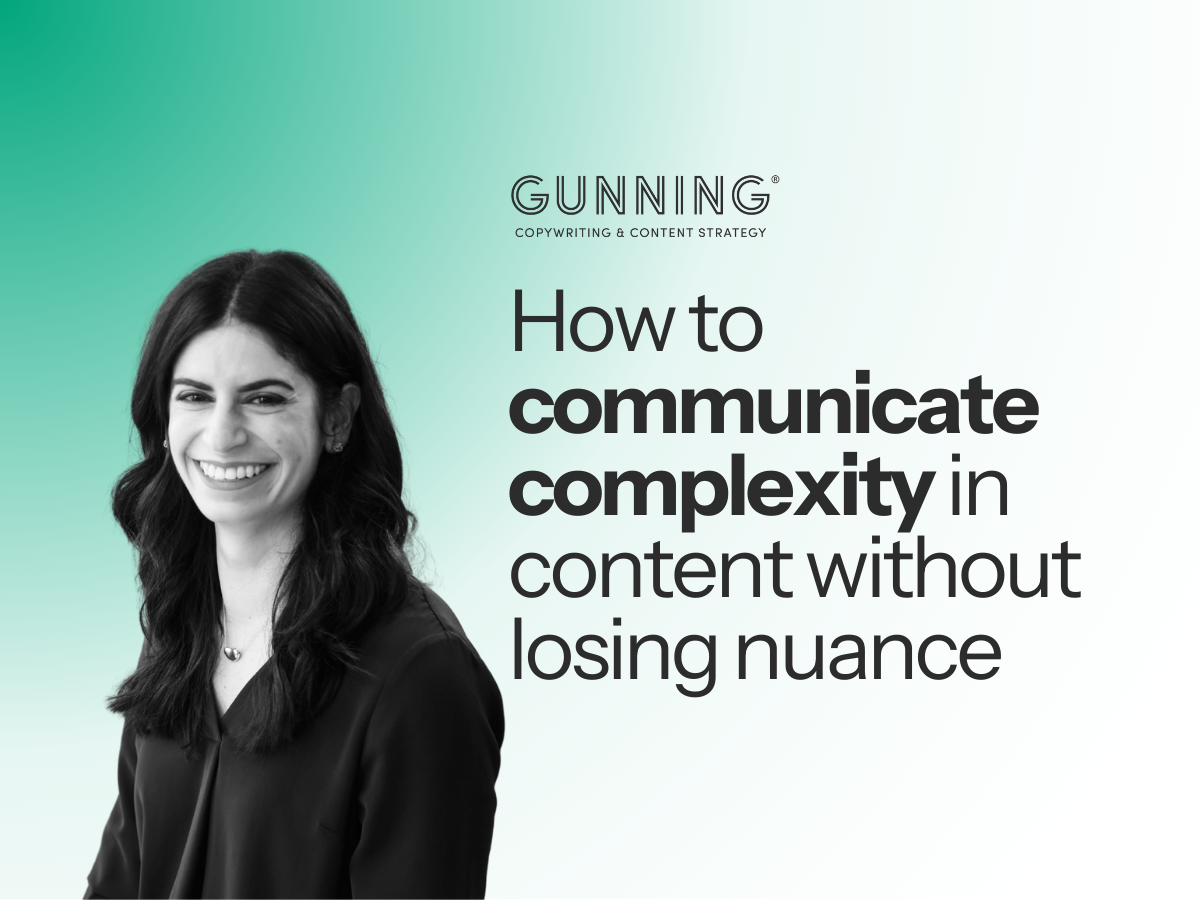
Every sector has a version of the same problem. In technology, everyone is “transforming business operations” and “scaling digital transformation”. In energy, everyone is “accelerating the transition”. In manufacturing, everyone is “building sustainable value chains”. In professional services, everyone is “creating tangible impact”.
None of it is wrong, exactly, it's just interchangeable: swap the logo on the page, and the sentence still works for a competitor.
The instinct when you're short on time and communicating something genuinely complex is to reach for the phrase that covers the most ground. But that's how nuance gets lost, and nuance is what communicates your expertise and makes light bulbs go off in the mind of your target audience.
Here we look at the fix.
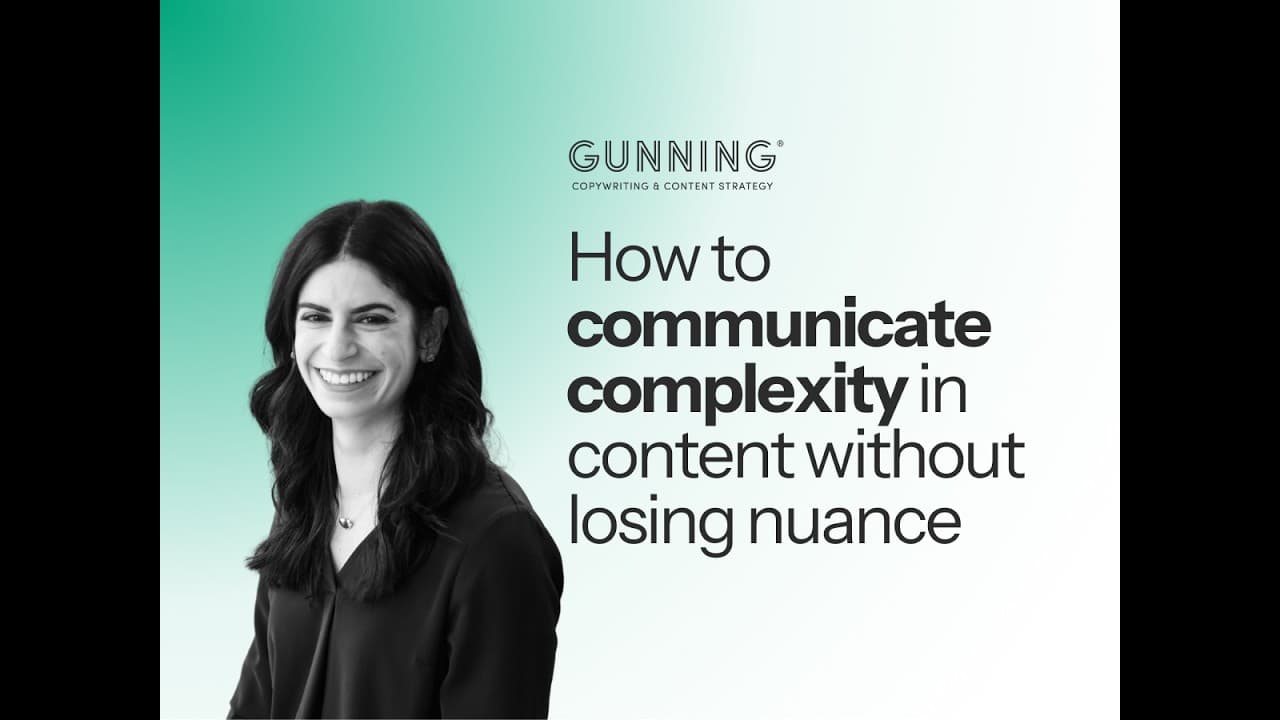
Prefer to read? The transcript is available below.
The starting point isn't your message, it's the conversation already running in your reader's head.
A CTO has to translate value upwards to the rest of the C-suite and the board, so the business benefit matters. But they also came up through a technical career and work with engineers and developers on a daily basis, so the right amount of tech language will resonate. Drop it in at the right point, and you've demonstrated something a generic pitch can't: that you understand the problem at the technical level and the business level, not just one or the other.
The same logic applies across sectors. An energy client's audience is weighing policy shifts alongside commercial ones. A manufacturing buyer is thinking about supply chain resilience in the same breath as unit cost. Write only in commercial language and you sound like you've never been near the technical detail. Write only in technical language and you lose the person who has to justify the spend upward. The reader wants both, in proportions that match how they actually think about the problem.
Therefore, think about the words your audience uses to describe their own problems, not the words your industry uses to describe the solution. The more you can get in their head and use their language, the easier you’ll find it to strike the right balance. Testimonials and reviews are goldmines here – see what words and phrases come up, and incorporate them into your copy.
At Gunning Marketing, a key discussion question in our new client discovery workshop is “What are your differentiators?” The honest answer we get is often something like “we're high quality, we're committed to customer service, we deliver great results”. Which is also what every competitor says about itself. Line up 5 competitor websites in a crowded market and you'll frequently find the same claims in a different font. That's the “spot the USP” problem: if you could swap the logo and the copy would still hold up, you haven't yet found the messages that will cut through.
So don’t talk about being “market-leading”, “cutting-edge” or “innovative”. Dig into what makes you market-leading, cutting-edge or innovative. Is it because you hold 150 patents? Because you've developed a new process? Because 9 out of 10 leaders in an industry already work with you? Then say so.
Showing outperforms telling every time.
The quickest way to get from vague to specific is to keep asking “so what?” until you hit something that resonates with your audience.
We ran exactly this process with a diecasting business. The starting claim was the one almost every manufacturer reaches for first: “we're high quality.”
So what?
It means they run 3 different types of diecasting within one facility.
So what?
It means they can choose the most economical and appropriate casting method for each individual component, rather than forcing every job through a single process because that's the only one they've got.
So what?
It means a customer can centralise production of multiple different components with one supplier and get the benefit of economies of scale, instead of running separate relationships with 3 different specialist casters.
That's the moment a vague quality claim turns into a specific reason to choose you over a competitor who casts one way and one way only. Nobody had to invent anything to get there – the differentiator was already true. It just needed a few rounds of “so what?” to surface the language that works most effectively.
That thinking is exactly what shaped work we did with Sarginsons. The company offered a genuine range of diecasting capabilities, but the market perceived its low-pressure diecasting option as the expensive choice. Rather than defaulting to a generic “quality and range” message, we followed the “so what?” chain through to the commercial reality: the right process for the right component is often the more economical one. That became the article “Can low pressure save you money?” – a persuasive piece of content built around a specific, provable claim. You can read the full Sarginsons case study for the wider story.
The same test works on almost any generic claim. “We have great customer service” becomes, after a few rounds of “so what?”, something like: customers know their order will arrive on time, correctly packaged, and easy to process through incoming quality control – which reduces their production costs and lets them run a genuine just-in-time operation. That's not just a nicer way of saying the same thing, it’s a differentiated and useful thing to say.
Communicating complexity without losing nuance isn't about writing more words or hedging every claim with a caveat. It's about:
In a market where your reader is wading through a dozen related pieces of content as part of their buying process, the memorable ones say something specific and resonant. Make sure that’s your content.
It's easy to sound the same when you're in a crowded space and have limited time to communicate a message. For example, in technology, everybody is transforming business operations and scaling digital transformation. In manufacturing, everybody is promoting sustainable value chains. And in energy, everybody is accelerating the energy transition.
So, how do you simplify that complexity without losing the nuance?
Think about the language that your target audience uses to describe a problem or talk about a trend. We say that great content is always about continuing the conversation going on in your prospect's head already.
For example, a Chief Technology Officer might be very focused on the business benefits of a particular solution because they have to communicate that upwards to the rest of the C-suite and the board, but they come from a technology background and so some of that tech jargon does resonate with them and demonstrate that you understand both at the business level and at the technology level.
Often you lose nuance simply because you're overgeneralising in the interest of time.
For example, what makes you market-leading or cutting-edge or innovative?
We often start by asking clients, “What are your differentiators?” What we're trying to do is get you into a position where you're saying something that feels more unique and authentic to your brand, and not something where you have USP spot-the-difference where somebody just swaps the logo out on your website or piece of content for a competitor.
So, for example:
“We're high quality.”
So what?
“Well, it means we have 3 different types of diecasting in one facility.”
So what?
“Well, it means we can choose the best and most economical way to manufacture a particular component.”
Boom, there you've got it. You've started with something like “quality” and then you've been able to drill down using the “so what” test into something that is very specific to the benefit in terms of how the quality is delivered and the ancillary benefits around economies of scale.
Anna Gunning is the director of Gunning Marketing, a specialist B2B copywriting and content strategy agency based in Birmingham. She works with scale-up, mid-market, and enterprise businesses across technology, manufacturing, energy, property and construction, finance, and professional services. She has been writing B2B content for more than 20 years.
Anna Gunning is the director of Gunning Marketing, a specialist B2B copywriting and content strategy agency based in Birmingham. She works with scale-up, mid-market, and enterprise businesses across technology, manufacturing, energy, property and construction, finance, and professional services. She has been writing B2B content for more than 20 years.