Events

Every few months, another headline warns that brain rot has killed our attention spans and long-form content is dead. Usually in a fairly long LinkedIn post. But they’re wrong.
Whether you prioritise long-form or short-form content depends on your target audience, what they already know, what they need to know to take the next step in their buying journey, and the channel you’re using. Long-form content tends to do its best work earlier, building credibility and informing the buyer’s research process. Shorter, sharper content earns its place nearer conversion, when the job is to make the next action easy.
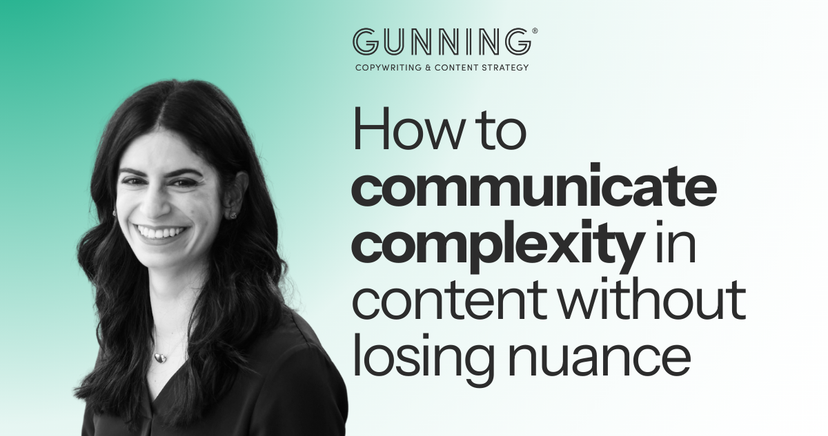
Prefer to read? The transcript is available below.
The research on short content is real, but it’s mostly about content people didn’t choose to see. A study in the June 2025 Journal of Marketing found that video ads of 10 seconds or less generated 3x the engagement of a 17-second ad on Facebook. Attention for an ad that interrupts what you’re watching peaks in the first few seconds – and impatience grows the longer it runs. That makes short-form video and ads useful for catching attention early on – as long as they point to something meatier.
Content your buyers go looking for plays by different rules. The 2026 Edelman-LinkedIn B2B Thought Leadership Impact Report found that 48% of final decision-makers spend 4+ hours a week reading thought leadership. In other words, people will still read a whitepaper, it just has to be the right whitepaper at the right moment.
Buyers are doing more of their research before they speak to you – and checking what they find. Forrester’s State of Business Buying 2026 found that buyers often start with AI search, but validate its answers with trusted sources: peers, product experts, and industry analysts.
That makes early-stage content more important, not less. Newsletters, guides, and thought leadership help buyers understand their problem, see your expertise, and build an internal case – often for a buying group whose members all need different things. The same Edelman-LinkedIn report found 79% of decision-makers are more likely to champion a vendor during an RFP if it consistently publishes quality thought leadership.
Near the decision point, every extra sentence is another reason to put it off. Harvard behavioural scientist Todd Rogers shared a neat example on Phill Agnew’s Nudge podcast. He emailed around 7,000 US school board members asking them to complete a survey. Cutting the email from 127 words to 49 nearly doubled the response rate – the opposite of what most people predicted.
But the lesson isn’t “always go short”, it’s that once someone knows what they need, your job is to get out of their way. A consultation page or free trial email should make the next step obvious, not re-sell the whole proposition. Getting specific helps you say more with fewer words.
| Buying stage | What your audience needs | Content that tends to work |
|---|---|---|
| Awareness | To understand a problem or trigger – a regulatory driver, a cost-saving imperative, a board directive | Articles, thought leadership, guides, plus short-form video and ads that lead to them |
| Consideration | Proof that you understand their world and can solve the problem | Whitepapers, reports, case studies |
| Conversion | A clear, low-effort next step | Short emails, focused landing pages, sharp CTAs |
Your own data is a better guide than any industry average. In HubSpot’s 2026 State of Marketing report, 49% of marketers named short-form video a top ROI format, up from 24% in 2025. But long-form video also doubled, from 14% to 29%, and blog posts climbed from 15% to 23%.
Company size shifts the picture again. Enterprises are 24% more likely than average to see ROI from ebooks, while small businesses are 35% less likely. As HubSpot itself concludes, the right formats depend on who your customers are.
Your analytics are the quickest way to find out. Look at:
Those patterns show what works for your audience. If visitors land on pages that don’t explain what you do straightaway, it’s also worth checking for these common messaging mistakes.
The real risk isn’t picking the wrong length, it’s padding long content or rushing short content. In the 2027 B2B Content and Marketing Trends report from the Content Marketing Institute and MarketingProfs, 64% of marketers named consistently providing useful, practical information as the top way to build trust. Yet 65% are under pressure to produce faster, and 29% say that pressure is making their content more generic. (Speed has its place – here’s how we use AI without losing the thinking.)
Whatever the format, start with the reader: what do they know now, and what do they need to know next?
If you’d like a second pair of eyes on your content mix, get in touch.
There’s no ideal word count – a B2B blog post should be as long as it takes to answer the reader’s question, and no longer. For context, Orbit Media’s 2026 survey of 1,042 content marketers found the average blog post is 1,312 words, down from a peak of 1,427 in 2023. Averages aside, length depends on your topic, target audience, and where they are in their buying journey.
Not directly. Google’s guidance on helpful content says it has no preferred word count – what matters is whether the content answers the searcher’s question. For AI search, structure matters more than length: clear headings and sections that make sense on their own are easier for AI tools to find and quote.
Short-form content often works best close to conversion, when your buyer already knows what they need and the job is to make the next step easy – booking a consultation, starting a free trial, or requesting a demo. Short-form video and ads can also work well for grabbing attention during the awareness stage, as long as they lead to a meatier next step, like a guide, report, or case study.
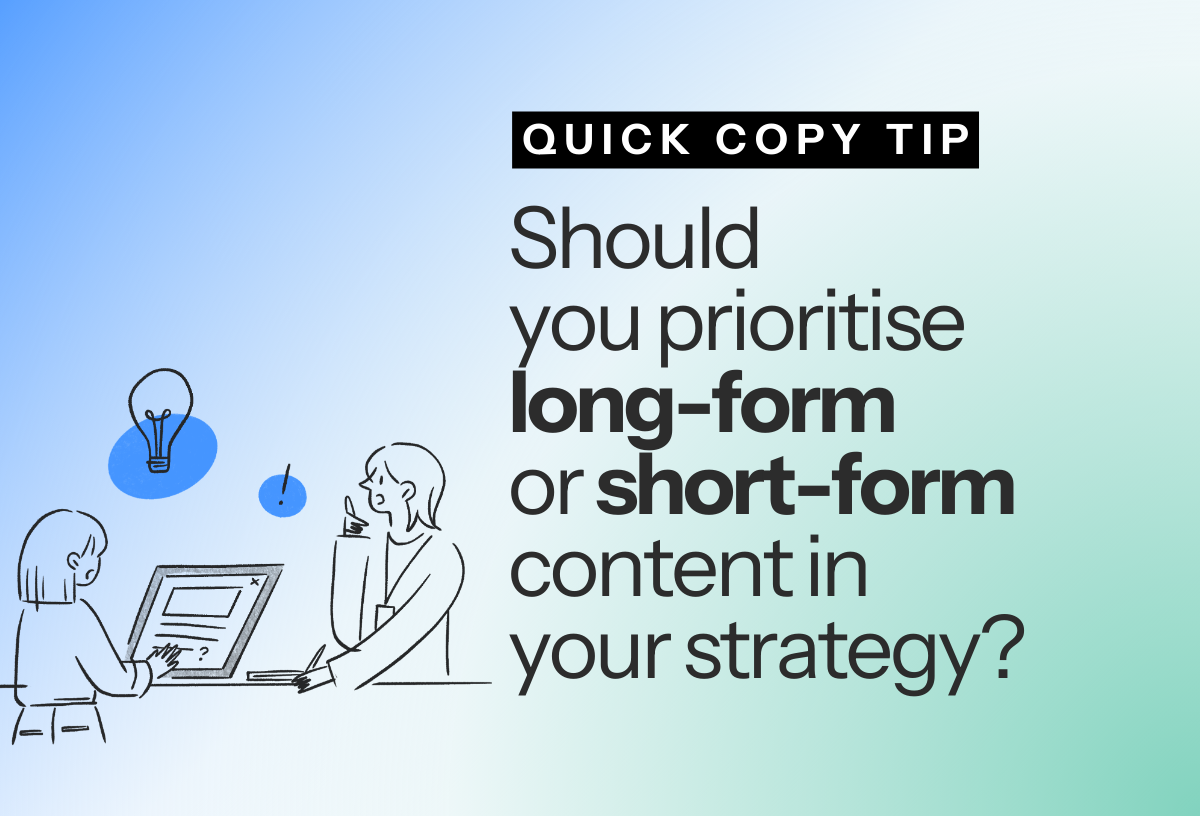
Should we prioritise long-form or short-form content in our strategy? The answer goes back to who your target audience is, what information they already know, and what information they need in order to take the next step on their buying journey.
So don’t think about the rights and wrongs of short versus long – or listen to all the stuff about limited attention spans. Because people will still read a whitepaper if it’s in the right place in their buying journey. Likewise, if you’re nearing the conversion stage, that might be where it’s better to be shorter and sharper, so that it’s easy for people to take action and complete their next step.
Anna Gunning is the director of Gunning Marketing, a specialist B2B copywriting and content strategy agency based in Birmingham. She works with scale-up, mid-market, and enterprise businesses across technology, manufacturing, energy, property and construction, finance, and professional services. She has been writing B2B content for more than 20 years.