AI

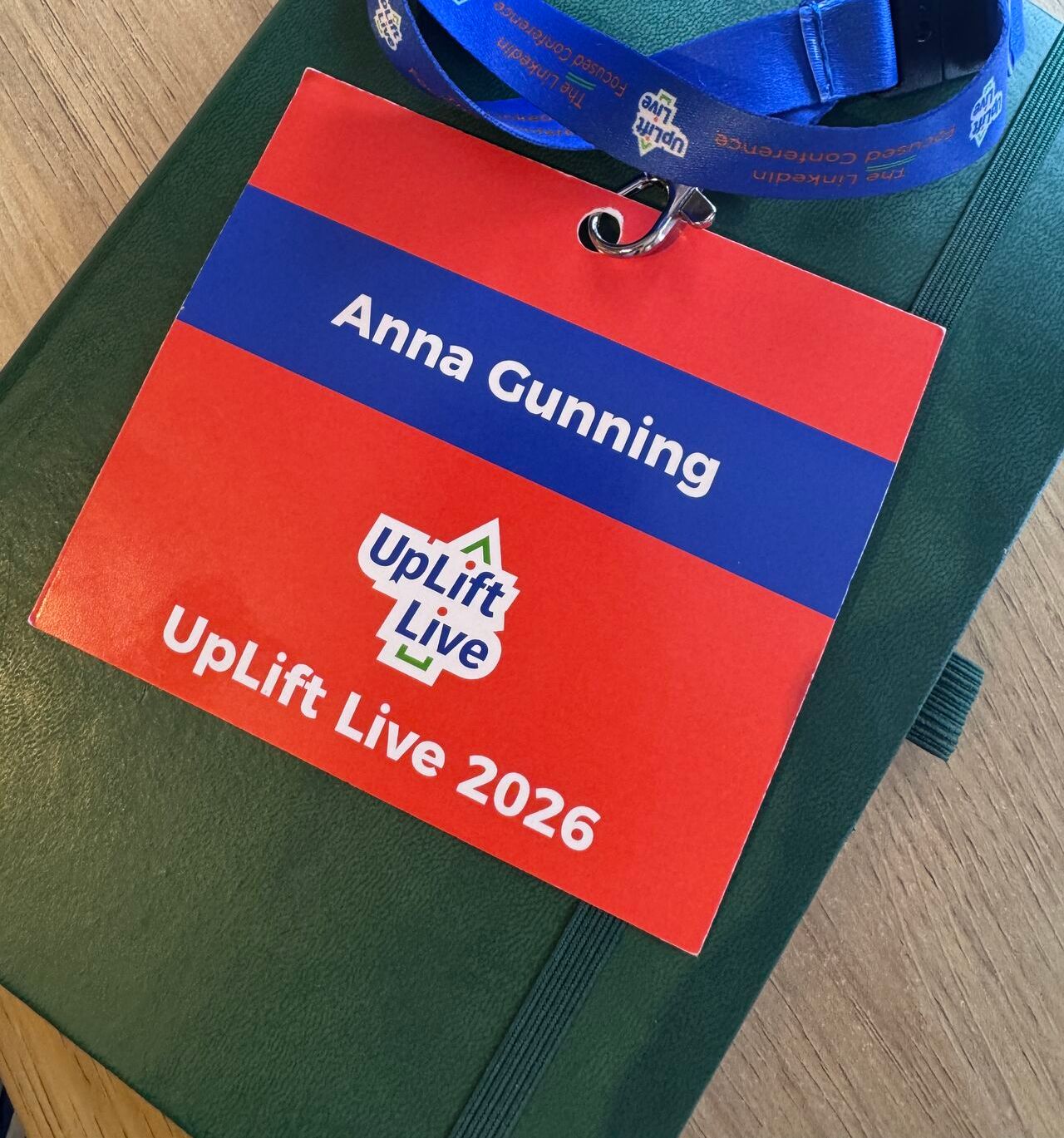
Events can go one of two ways: you either come back buzzing with ideas that actually change how you work, or you come back with a notebook full of things you already knew, dressed up in new slides. Uplift Live was the former.
Here’s what I found most useful, surprising, and immediately applicable. If you use LinkedIn as a marketing and sales channel, there’s something here for you.
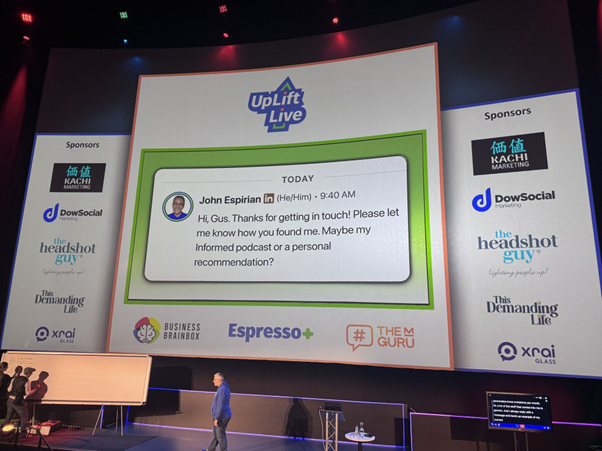
John Espirian’s session on LinkedIn direct messages was, for me, the single most immediately actionable talk of the day. The core argument: DMs have been quietly doing something that posts cannot.
2 things stood out:
On the practical side, the easiest way to build a DM habit is to send a note with every connection request (since free LinkedIn limits the number of notes you can add to invitations). This creates a natural cadence without requiring a separate strategy.
A note on InMails – they’re useful, but only if you use them to be genuinely helpful and specific. The association with cold outreach spam means anything generic gets mentally filed under “noise.”
It’s also worth flagging that DMs aren’t private in the way WhatsApp is. But there is an upside, in that you can download your full sent and received message archive and analyse what has worked. That is, as John pointed out, a genuinely good use case for AI.
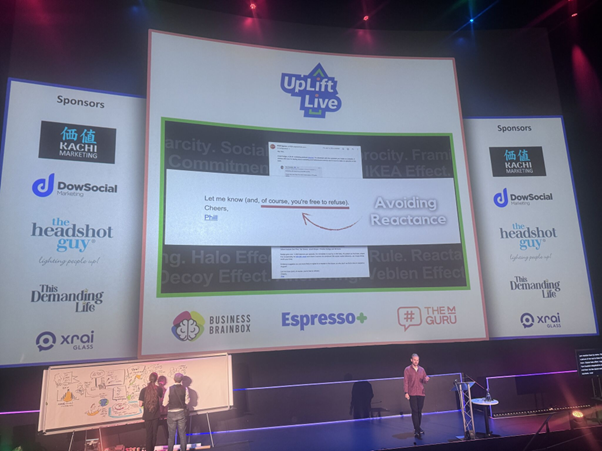
Phill Agnew’s talk was a highlight. He presented evidence from his own podcast-building experience (and his Nudge Podcast is one of my favourites) that behavioural science nudges apply directly to LinkedIn content and advertising – and work well.
The nudges he discussed included:
I had a recent personal encounter with this principle. My son used it on me when asking for extra video game time. He made it clear I could absolutely say no. I said yes – and gave him 30 extra minutes. Effective nudge.
The broader point – and this applies directly to LinkedIn content – is that the principles persuasion that researchers have spent decades studying don’t stop working just because the medium is social media. If anything, they become more useful in shaping short-form content because you have fewer words to work with – and each one has to earn its place.
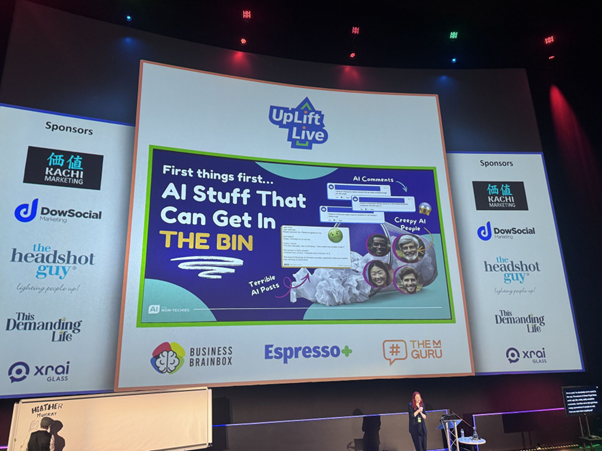
Heather Murray’s session on using AI effectively for LinkedIn content was probably the most practical grounding of the day – and a useful corrective to the assumption that AI makes content creation faster.
The key points:
This tracks with what I see in B2B content right now. AI raises the floor – it makes it easier to produce something serviceable. But serviceable isn’t the goal. The goal is content that actually cuts through: that sounds like a specific person, makes a specific point, and gives the reader something they didn’t have before. That still requires human insight.
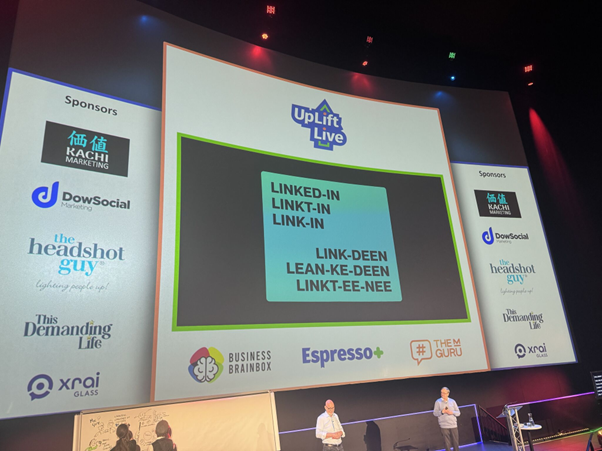
Mic Adam and Guy Strijbosch gave an eye-opening session on how LinkedIn use varies across cultures. If you operate internationally – or are thinking about it – this matters more than most people realise.
The highlights:
If your audience spans markets, your LinkedIn strategy needs to reflect that. A single content approach won’t serve multiple cultural contexts well.
Nicole Osborne built on the behavioural science theme by discussing the pratfall effect – the idea imperfection (a stumble, an admission, a moment of honesty about what didn’t go to plan) actually makes you more likeable, not less.
On LinkedIn, the application is straightforward. Content that’s too polished can read as inauthentic, which doesn’t build trust or leave a lasting impression. The slightly rough edge, the admission you’re still working something out – are what makes a post memorable.
This doesn’t mean showcasing manufacturing vulnerabilities or performance issues. It means being a real person rather than an over-curated one. Dave Harland made a related point about humour on LinkedIn, that it can play a role in making content land but it needs to be authentic. Because forced wit is immediately recognisable – and immediately off-putting.
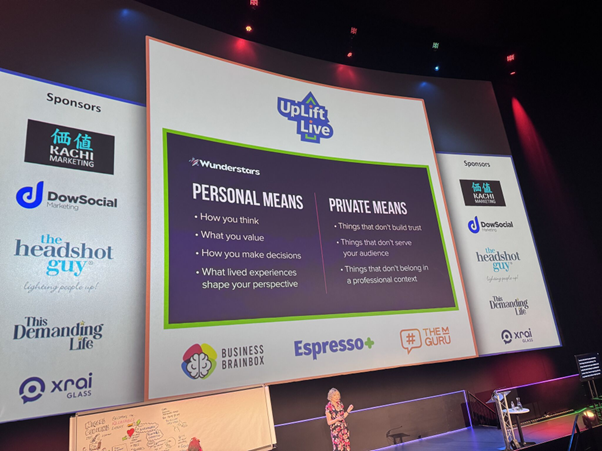
Tony Restell and Brenda Meller made a point that I suspect many people in the room needed to hear: you only win more business through LinkedIn by integrating it with your broader sales approach.
LinkedIn is a trust-building tool, not a closing tool. The people who try to use it for direct sales conversion – pitching in DMs, leading with offers, measuring results against immediate pipeline – are measuring the wrong thing and wondering why it doesn’t work.
LinkedIn builds awareness and keeps you front of mind. You become the person someone thinks of when a particular problem surfaces, which might take months. But when that moment arrives and your name comes to mind, the relationship is already half-built.
Therefore, your LinkedIn content strategy needs to be patient, focused on consistent, useful, authentic posting over time.
What struck me about Uplift Live is how consistent the underlying message was, and it’s not rocket science: the fundamentals of human connection – trust, authenticity, usefulness, patience – cut through the algorithm and AI.
The people who treat LinkedIn as a distribution mechanism for content will get middling results. The people who focus on the relationship – with what the person on the other side of the phone/browser needs to think or feel or know – and work backwards from there will get the results that make LinkedIn worth the time.
Anna Gunning is the director of Gunning Marketing, a specialist B2B copywriting and content strategy agency based in Birmingham. She works with scale-up, mid-market, and enterprise businesses across technology, manufacturing, energy, property and construction, finance, and professional services. She has been writing B2B content for more than 20 years.