Events

It’s become a modern cliché – our attention spans are so short that there’s no point writing anything more than 500 words.
(It’s not true, by the way. People still make time for content that’s useful to them. The 2026 Edelman-LinkedIn B2B Thought Leadership Impact Report found that 48% of decision-makers spend more than an hour a week reading in-depth insight content. There’s more on this in should you prioritise long-form or short-form content?)
And here’s another modern cliché – direct mail is dead in the age of digital marketing.
(Also not true. A direct mail specialist I worked with put it nicely – it’s the only channel that forces you to engage for more than a couple seconds, because you have to pick it up and walk from the door to the bin.)
Finally, here’s modern cliché number 3. We have such high expectations of marketing that everything needs to look super polished and highly designed.
(You guessed it – also not true. Polish isn’t the same as persuasion, and greats like David Ogilvy and Drayton Bird found that plainer, more personal formats often outperformed glossier ones. Now that AI can make anything look and sound polished, standing out takes more than that. In HubSpot’s 2026 State of Marketing report, 63% of marketers said they need more unique, human-centred content to stand out. AI is great at polish, but it can polish away what cuts through.)
This sales letter landed on my doorstep a while ago, and it’s still a perfect case in point.
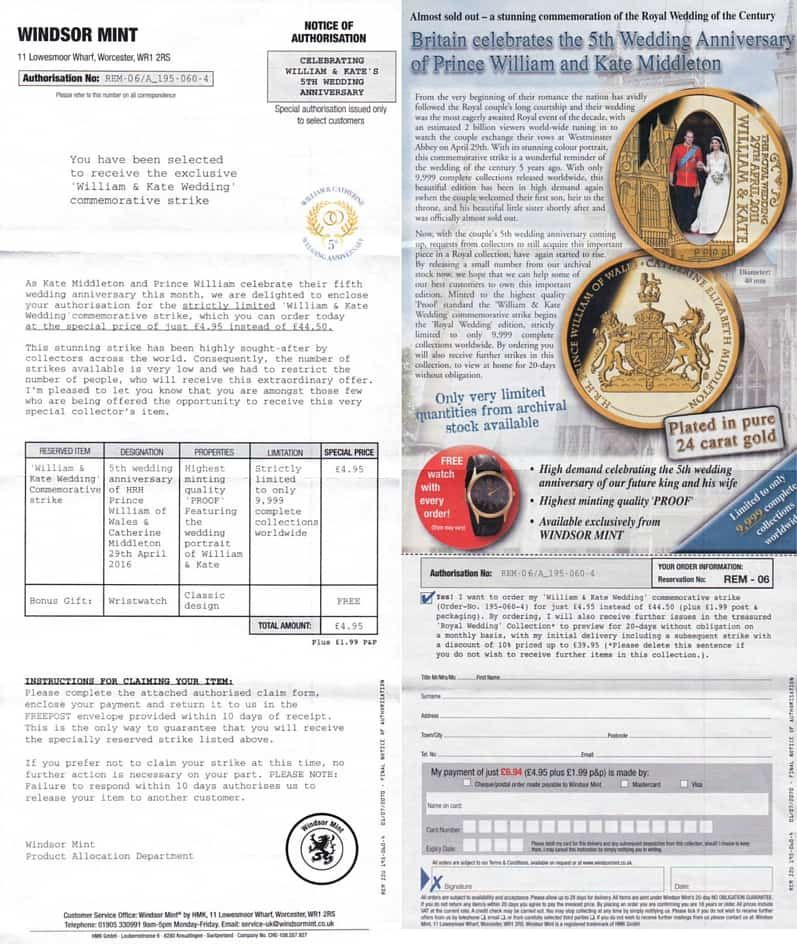
This letter successfully ignores all 3 of those marketing clichés.
The font is Courier, the bane of graphic designers but long favoured by direct mail copywriters. It’s 2 pages long, taking the time to say what it needs to say to get the sales message across. It doesn’t waste space with the words ‘Order Form’ – it ticks the box for you so the decision feels partially made already.
And there are classic copywriting techniques at work:
I have a confession – I don’t collect coins. But even so, I’m chuffed to be selected. Rationally, I know this mailing went to everyone on my street, but I feel special because the Product Allocation Department has authorised me to receive the offer.
(Note: The major failing? There’s no address or salutation, and this lets down the copy. How can they have selected me specially if they have no idea who I am?)
Storytelling has been a marketing buzzword for years, but the fact remains that humans are psychologically programmed to respond to stories. Page 2 starts with the story of the Royal Wedding, and makes me remember where I was on that bonus Bank Holiday.
Stories work in B2B too. In the 2027 B2B Content and Marketing Trends report from the Content Marketing Institute and MarketingProfs, 50% of marketers named customer stories and testimonials as one of the top ways to build trust.
Only very limited quantities are available. This strike is almost sold out. I only have 10 days to claim mine or the set allocated to me will automatically go to someone on the B list.
Not only is this limited edition collector’s item available at an immense discount (£39.55 off), but I get a bonus free watch.
This letter looks like an anachronism to people with 21st-century marketing goggles on. But I’d bet a William & Kate commemorative strike (and bonus watch) that it delivered a return on investment to make most ‘modern’ marketers green with envy.
Swap the coins for a cloud platform or a manufacturing capability, and the same techniques still hold. Make the reader feel the message was meant for them. Tell a story they recognise. Give them a reason to act now. And make the next step feel half-done already.
Anna Gunning is the director of Gunning Marketing, a specialist B2B copywriting and content strategy agency based in Birmingham. She works with scale-up, mid-market, and enterprise businesses across technology, manufacturing, energy, property and construction, finance, and professional services. She has been writing B2B content for more than 20 years.