Events
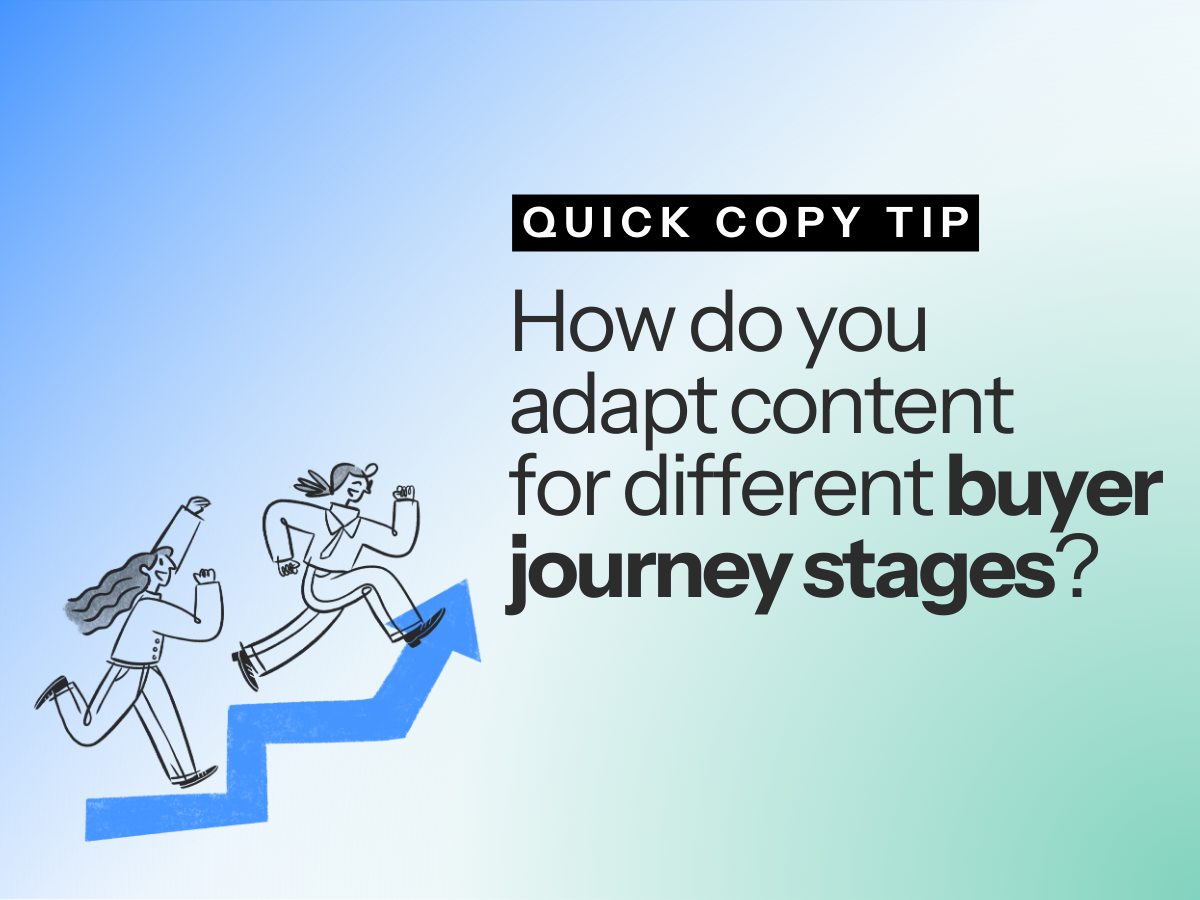
B2B buyers consult an average of 10+ digital sources and engage in 27 distinct touchpoints before reaching a purchase decision (Forrester). That's a lot of content encounters – and every one of them is an opportunity to advance the conversation.
That means your headlines, messaging, and calls to action need to evolve as your audience moves through their decision-making process. Content aimed at someone who has just become aware of a problem looks very different from content aimed at someone who's comparing solutions and ready to talk.
Here's how to structure your thinking at each stage.
At a basic level, adapting content for the buyer journey comes down to this:
What does the target audience know now, and what do they need to know to take the next step?
That question sounds simple, but it forces you to stop producing content from the inside out – starting with what you want to say – and start from where the reader/viewer/listener actually is. It’s the difference between content that shouts into the void and content that nudges someone forward.
Before mapping content to journey stages, it’s worth acknowledging how complex the B2B buying group actually is. Depending on which analyst you read – Gartner, Forrester, IDC – you’re looking at buying groups of between 6 and 17 people for most B2B purchases.
This has real content strategy implications. Some channels – email, paid advertising, LinkedIn targeting – let you personalise by role. Others, like your website, have to work more broadly. When you’re producing content for those multi-audience channels, it helps to ask:
If your prospect is at the problem-aware stage, they’re not searching for your product or service – they're searching for the issue they're trying to solve. So frame your headline around that problem, not your solution.
In practice, that means leading with the regulatory driver, the industry challenge, the cost pressure, or the board-level directive – whatever has prompted them to start looking.
In the sectors we work in – like technology, energy, manufacturing, finance, and professional services – those triggers are usually specific and knowable. Use them. Show you understand what has brought someone to this point, and you establish credibility before you've said a word about your solution.
A whitepaper framed as ‘The case for rethinking your energy procurement strategy’ will attract a reader at a different stage than ‘A buyer’s guide to flexible energy contracts’. Both are valuable, but they serve different purposes.
The call to action is where a lot of B2B content goes wrong. Asking a prospect who’s just heard of you to book a demo is like asking someone to move in together on a first date.
Think about what the next best action is at each stage.
A landing page illustrates this well:
The reader has moved through the content, so the ask makes sense in a way it wouldn't have at the top.
Earlier in the journey, intermediate conversions should follow the same logic: a whitepaper, a newsletter sign-up, a diagnostic tool – something that provides value without demanding too much commitment. The CTA should feel like a natural next step, not a ‘LinkedIn bro’ sales move.
The perennial debate. And the honest answer is: it depends on where your audience is in the journey, what channel you’re using, and what your analytics are telling you.
The attention span argument is overused. Buyers will read long content if it’s useful, relevant, and respects their time. They will abandon short content if it doesn’t say anything worth reading. Length is a red herring; relevance is what you should focus on.
In practice, this often (but not always) means that earlier in the journey, longer thought leadership content – articles, guides, in-depth newsletters – builds awareness and credibility. It gives prospects the insight they need to make an informed decision, and signals that you understand their world. Then, the closer you get to conversion, shorter and sharper can work better because it’s focused, direct, and easy to act on.
Websites and brochures can be where the multi-persona challenge gets most acute. Here are a few ways to handle it without producing a document that tries to say everything and ends up saying nothing:
Your analytics will tell you things about your audience that no framework can. Are visitors accessing your site on mobile or desktop? Are they spending time on thought leadership and case study pages, or going straight to service pages? What's the engagement like on your social content – and what topics are generating the most response?
This matters because it tells you where your audience actually is in the journey when they find you – which isn't always where you assume. If traffic is heavy on case study pages, your audience may be further along the consideration stage than your content currently serves. If people are bouncing from service pages, the content may be pitching too hard too soon.
The data grounds the strategy in reality rather than assumption, so use it.
Every decision about buyer journey content – the framing, the CTA, the format, the length – comes back to that same question we talked about at the start:
What does this person know right now, and what do they need to know to take the next step?
The mistake most B2B content makes is answering a different question entirely: what do we want to say? That produces content that serves the business, not the reader. And content that serves the business at the expense of the reader tends not to move anyone anywhere.
Get that orientation right – audience-first, stage-appropriate, with a CTA that feels like a natural next step rather than a sales move – and the rest tends to follow.